Loading lesson…
Prompts as code
20 min read
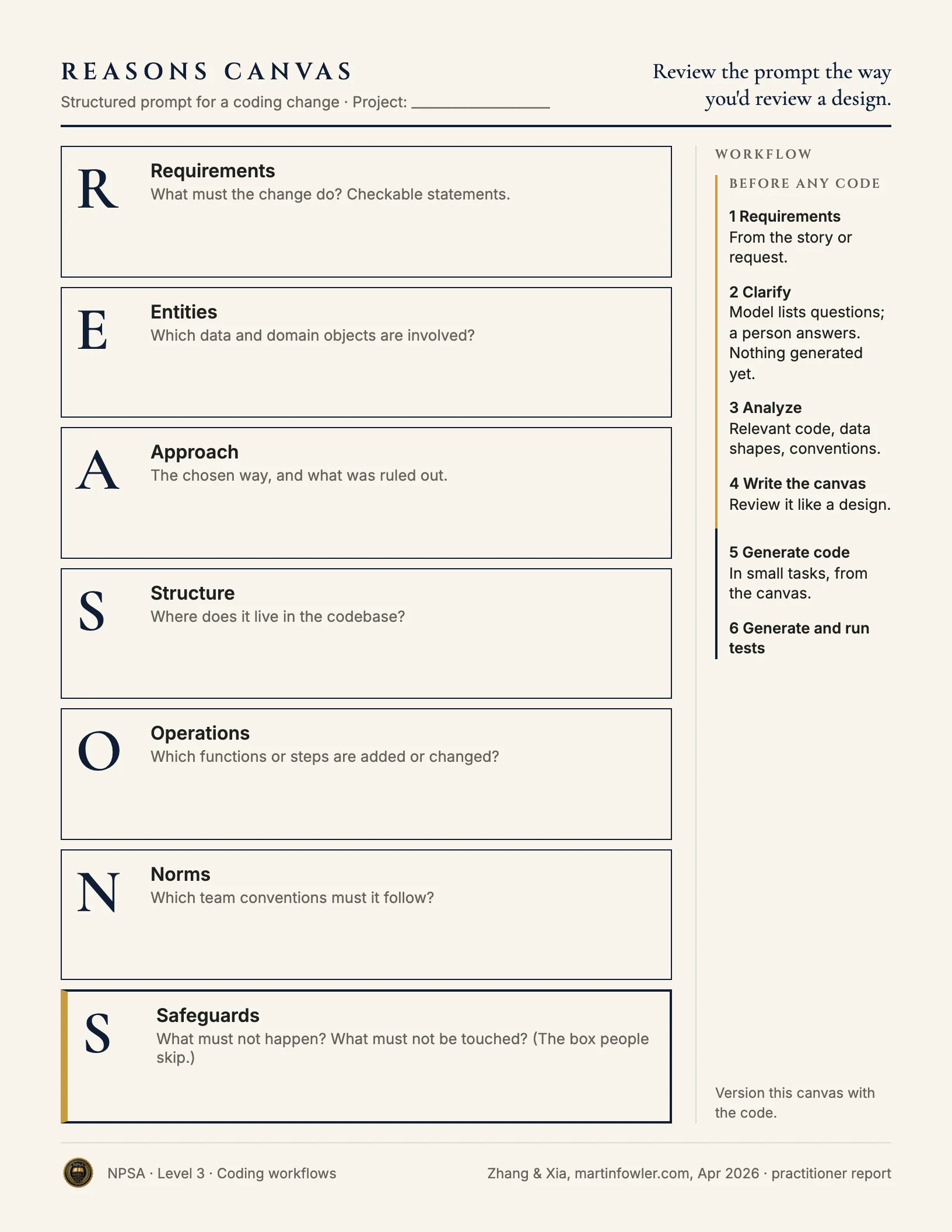
Once a prompt runs in production, it behaves like code. Other systems parse its output, teams copy it, and a small edit can break something three steps downstream. This module covers the engineering practices that keep shared prompts dependable: clear framing and contracts, a governed core with local variants, managed context, and releases that come with evidence, an owner, and a way back.
What you will be able to do
- Repair task, audience and deliverable framing, replacing Role framing versus concrete task criteria where a persona is doing the work criteria should do.
- Define a Fixed extraction schema with explicit unknown values and Repair parser contract with schema validation and failure path.
- Use stages so Decomposition exposes stage dependencies, and Retrieve or manage reusable context for repeated workloads.
- Build a Modular core with controlled local variants.
- Ship with Owned versioned release evidence and rollback and a Controlled rollout and operational handoff.
- Apply all of this to a Campaign brief with audience, channel and measurable objective.
The idea
Framing is the first contract. A production prompt should state the task, the audience, and the exact deliverable. "You are a world-class marketer" is a persona, not a specification. Replace it with criteria: required fields, length limits, channel rules, prohibited claims. Keep a role only if it measurably changes output on your test set.
Schemas need an unknown. Every extracted field gets a type and an explicit unknown value, such as null or "not stated", defined in the contract. The parser should reject outputs that don't match, then follow a defined path: one retry with the error, then a human queue. A parser that silently coerces bad output into defaults is a bug factory.
Stages show dependencies. Splitting a workflow into stages, such as extract, then draft, then check, makes clear which outputs each stage relies on. When a downstream stage fails, you can test the upstream output directly.
Manage repeated context. If every run pastes the same 3,000-token brand guide, retrieve only the relevant sections, or use your platform's caching for stable shared context. Version that context like the prompt, because a stale guide produces stale output.
One core, controlled variants. When several teams need slightly different behavior, keep a shared core (task, schema, safety rules) and a small, documented configuration per team. Untracked copies drift, and when one breaks no one knows which version did it.
Release like software. Each version has an owner, a changelog, test-set results compared with the previous version, and a rollback plan. Roll out to a pilot group first, define what result triggers rollback, and hand off with a runbook: what it does, how to tell it's failing, who to call.
Worked example
Alicia Montoya runs marketing operations for a hotel group with six properties. A shared prompt turns property notes into campaign briefs, which a script parses into the email platform. Each property manager has edited a private copy. Last week the Denver copy started returning "Budget": "TBD" as text where the parser expected a number, and three campaigns launched with no spend cap.
Before:
You are a world-class hotel marketer. Write a great campaign brief
for our property based on these notes. Include budget, audience,
and goals.
The persona replaces criteria. "Great" and "goals" aren't checkable. There's no schema, so each copy invents its own fields, and nothing defines what an unknown budget looks like.
After:
campaign-brief core v3.0 | owner: A. Montoya | config: {{property}}

Task: Turn {{property_notes}} into one campaign brief for the email
channel.
Use only facts in the notes and in {{property_profile}}, retrieved
for {{property}}.

Return JSON:
{
  "property": string,
  "audience": string (who, with one defining trait),
  "channel": "email",
  "objective": string (one measurable outcome with number and date),
  "offer": string or "not stated",
  "budget_usd": number or null,
  "send_window": "YYYY-MM-DD/YYYY-MM-DD" or null
}
If the notes give no measurable objective, set "objective" to
"not stated". Do not invent numbers.

{{local_rules}}   # property config, max 5 lines, reviewed by owner
The parser validates against this schema. On failure it retries once with the error text, then routes the brief to Alicia's review queue. A null budget blocks scheduling in the email platform. Version 3.0 was tested against 40 saved briefs from all six properties before release: schema validity went from 82% to 100%, and two properties' local rules needed edits. It rolled out to two properties for a week, with a rollback trigger of any parse failure reaching the platform. The handoff document names Alicia as owner and lists how to roll back to v2.4.
Why this is stronger. The deliverable, audience, channel, and objective are explicit and checkable. Unknowns have one representation that the parser and the platform both respect. Local differences live in reviewed config, not forked copies. And the release came with evidence, a pilot, and a way back.
Try it
Setup. Take any prompt you or your team reuse. Copy it into a text file.
Task. Write a release header for it: name, version, owner, and date. Add an output schema with an explicit unknown value for every field. Split any team-specific instructions into a separate block marked as configuration. Then write three lines of handoff: what it does, how to tell it's failing, and how to roll back.
What a good result looks like. Someone who has never seen the prompt could run it, check its output against the schema, and know whom to contact. Every field has a defined unknown. Team-specific rules are separate from the shared core.
Watch for this
Caching saves cost, but a cached guide that's six months old will quietly shape every output. Put the context version in the release header.
Recap
- Specify task, audience, and deliverable with criteria, not personas.
- Give every field a type and an explicit unknown, and validate with a defined failure path.
- Stage workflows so dependencies are visible, and manage repeated context deliberately.
- Keep one governed core with small, documented local variants.
- Release with an owner, test evidence, a pilot, a runbook, and rollback.